Takeaways:
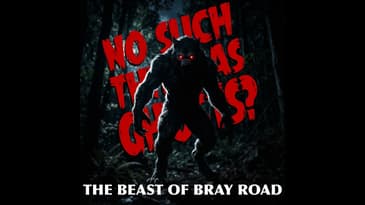
• They open with the Beast of Bray Road legend and he recounts Mike Shackleman’s midnight encounter that established the eerie local mythology.
• She points out most modern sightings describe scavenging behavior — roadkill and possums — not predatory attacks on people, which changes how one should interpret danger.
• They highlight Linda Godfrey’s pivotal role as the reporter-turned-author who popularized the beast, but note she sometimes enthusiastically folded flimsy reports into the bigger myth.
• He and she critically examine the supposed evidence: blurry trail-cam screenshots, photos of photocopies, and footprint casts with no ruler or scale — examples given show why those artifacts need better documentation.
• They list plausible, mundane explanations like a mangy bear, a large wolf or dog, misidentification, or shared rumor amplification, and suggest real experiments (clear video, repeated camera setups) to test claims.
• She skewers the tendency to stitch unrelated oddities together — lights in the sky, mysterious mist, and footprints — then label it interdimensional, stressing that mixing folklore and isolated anomalies makes poor science.
• They finish with practical advice: remain skeptical, document thoroughly (use continuous video, place a ruler next to prints), and consider local wildlife patterns before leaping to werewolf conclusions.